

When life moves quickly, our attention naturally drifts into busy thoughts, screen fatigue, and chronic stress. We end up living almost entirely in our heads, feeling disconnected from our bodies and the world around us.
“Grounding” simply means bringing your awareness back home to your body and rooting into the present moment. Like conscious breathwork and meditation, sound healing therapy meets you where you are, offering a deeply supportive, effortless way to settle.
Rather than asking a tired mind to sit in silence, healing sounds speak directly to the nervous system. Gentle sound vibrations bypass racing thoughts, soften physical tension, and invite the whole body into natural balance and ease.
Whether you are exploring sound healing for self-care or learning to hold space for others, here is a simple guide to using sound for deep, restorative grounding.
Why Grounding Needs Vibration: The Nervous System Connection
To understand why grounding feels so transformative, we have to look at the nervous system. When we feel ungrounded, our natural “fight-or-flight” response takes over, breathing becomes shallow, muscle tension builds, and our focus narrows to survival mode.
Sound therapy offers a gentle, direct pathway back to balance through three natural processes:
- Brainwave Harmony (Acoustic Entrainment): The brain naturally synchronizes with steady, rhythmic frequencies. Fast, scattered mental chatter gently slows from alert beta waves down into soothing alpha and theta states: the mind’s natural resting space.
- Felt Vibration (Vibroacoustic Resonance): Because the body is largely water, we feel sound as much as we hear it. Low, warm vibrations travel deep through tissues and bones, sending an immediate safety signal to the body.
- Calming the Heart & Gut (Vagal Tone Activation): Rich, resonant tones stimulate the vagus nerve, the main highway of your “rest-and-digest” system. This slows the pulse, deepens the breath, and invites your whole body to let go of holding.
Here are three simple, accessible practices using popular sound healing instruments and your healing voice to help you feel deeply rooted and at ease.
Practice 1: Low-Frequency Singing Bowl Body Placement
While high-pitched crystal singing bowls elevate mental focus and energy, low-frequency Tibetan singing bowls anchor awareness firmly in the body. Metal bowls produce rich, soothing vibrations, and when placed directly on the body, their gentle hum moves through your bones, helping your body soften and ground immediately.
Why It Works
Placing a vibrating bowl onto bony structures (like the sacrum, hips, or lower abdomen) transmits mechanical vibration directly through the bone and soft tissue. This somatic vibration stimulates mechanoreceptors in your fascia and skeletal joints, pulling attention away from cerebral chatter and anchoring it in dense physical matter.
How To Practice
- Position the body: Lie down on a supportive mat and place a folded blanket under your knees to make your lower back feel more comfortable.
- Tibetan singing bowl selection & placement: Choose a hand-hammered Tibetan singing bowl with a deep, low pitch (ideally calibrated around the root or sacral registers, in notes C or D). Rest the bowl flat on your solar plexus or heart space.
- The gentle strike: Using a padded felt or suede mallet, strike the bowl gently on its outer rim with a consistent, horizontal motion. Avoid rubbing the rim, which creates high-frequency overtones; single, spaced strikes produce the deepest fundamental vibration.
- Follow the resonance: Allow each strike to decay completely into silence before striking again. Direct awareness to the physical pulse traveling down the legs and into the soles of the feet. Continue for 7 to 10 minutes.
Practice 2: Steady Heartbeat Drumming (Entrainment)

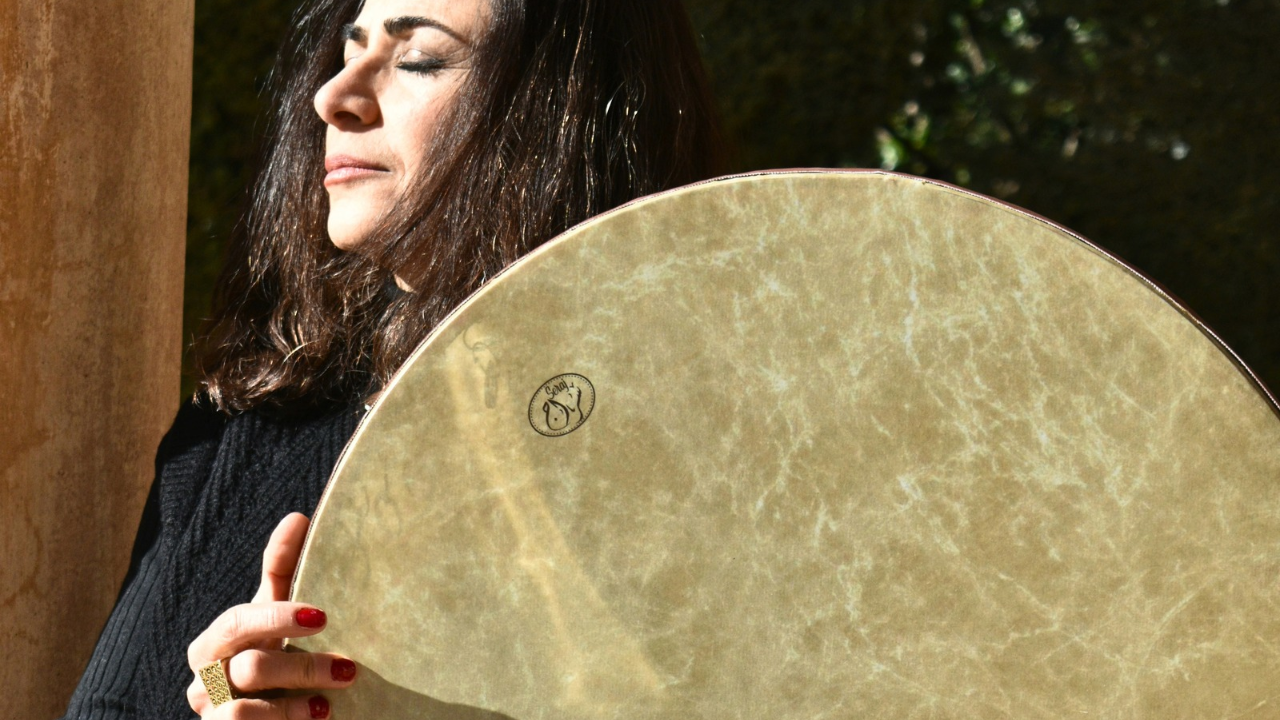
The frame drum is one of the oldest sound healing instruments used to help us feel settled and present. Its slow, steady beat acts like a gentle heartbeat, giving a busy mind a calm rhythm to follow.
Why It Works
Anxious or scattered states mirror irregular, erratic internal rhythms. A repetitive, low-tempo beat, between 55 and 65 beats per minute (BPM), mirrors a calm resting human heart rate. As you listen, your breath and heart naturally slow to match the drum’s steady pulse, gently quieting wandering thoughts and anchoring you in the present moment.
How To Practice
- Root your seat: Sit on the floor with legs crossed, or on a firm chair with bare feet pressed into the ground, and hold a frame drum close to your chest.
- Establish the heartbeat rhythm: Gently strike the drumhead using a soft mallet or your thumb to mimic an organic resting heartbeat: two rhythmic beats followed by a brief rest (beat-beat… rest… beat-beat… rest).
- Sustain the pace: Play at a steady 60 BPM (one beat per second) at a gentle, moderate volume. Focus on calm containment rather than deep trance.
- Coordinate the breath: Inhale for four heartbeat cycles and exhale for six. Maintain this rhythm for 5 to 8 minutes, feeling the drum’s gentle pulse directly against your sternum.
Practice 3: Somatic Vocal Toning

Did you know your own voice is one of the most versatile, deeply integrated resonant instruments available? Best of all, you can access it any time you want!
Why It Works
The vagus nerve runs directly through your throat and vocal cords before traveling down to your heart, lungs, and stomach. When you hum or tone with low, steady sounds, the vibration gently massages this nerve from the inside out, sending an immediate signal through your entire body that it is safe to relax.
How To Practice
- Check your posture: Sit tall with relaxed shoulders, releasing any held tension in your jaw and tongue. Place one hand over your low belly (two inches below the navel) and the other over your chest.
- The low “Voo” tone: Take a gentle, deep breath in through your nose. As you slowly breathe out, make a low, soothing sound from deep in your belly: “Voooooo.”
- Drop the pitch: Lower the pitch until you feel the vibration humming beneath your lower hand on the pelvic floor and lower belly, rather than buzzing only in your throat.
- Extend the exhale: Let the sound taper off naturally without straining your lungs. Pause in stillness for two natural breaths, noticing the internal spaciousness, before initiating the next tone. Repeat for 5 to 7 breath cycles.
Integrating Grounding Sounds Into Your Daily Practice
Whether you are practicing at home or holding space for others, a thoughtful order helps the body settle naturally:
- Session flow: Begin with gentle humming or toning to release tension in the chest and throat. Transition into the drum’s steady heartbeat to help the nervous system find its rhythm, then finish with the deep, warm resonance of a Tibetan singing bowl to anchor your awareness in the body and the ground.
- Coming back: Always gently close your practice with a moment of quiet reconnection. Sip room-temperature water, rest your palms on the floor, or gently wiggle your toes to feel fully present.
With regular practice, you will naturally begin to feel the deeper benefits of grounding – not as something to chase or force, but as an innate state of ease that is always waiting whenever sound and intention meet.
Other blogs we think you’ll enjoy:
Would You Like To Introduce Sound Healing Into Your Life?
Join one of our Online Sound Healing Courses or In-Person Training Courses!
Join Our Sound Healing Newsletter
Be the first to hear about upcoming events, workshops, and exclusive offers on instruments and training.
Unlock a world of free resources, inspiring sound healing courses, and more!
SPAM is a NO-NO! We will never sell your information, for any reason.